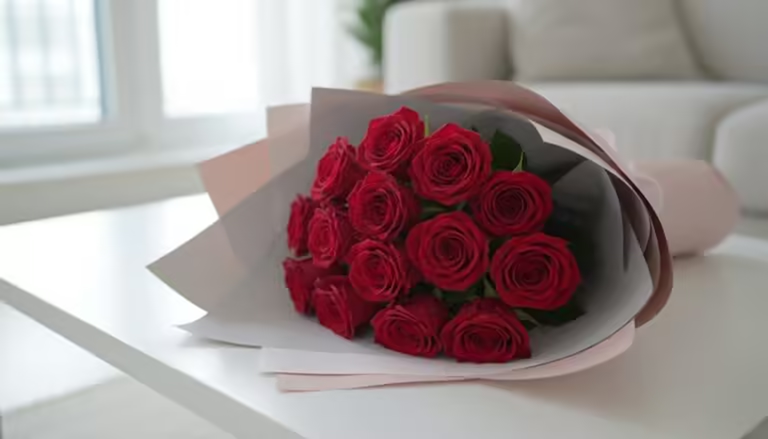
Have you ever sent a dozen red roses only to realize the recipient saw them as a predictable cliché rather than a sincere confession? Or sent a vibrant yellow-and-red bouquet, only to accidentally signal a shift from friendship to romance?
The problem isn’t the flowers. It’s the grammar. When you choose a cross-border flower delivery service to express your feelings across the miles, understanding this silent language is the key to ensuring your message is received exactly as intended.
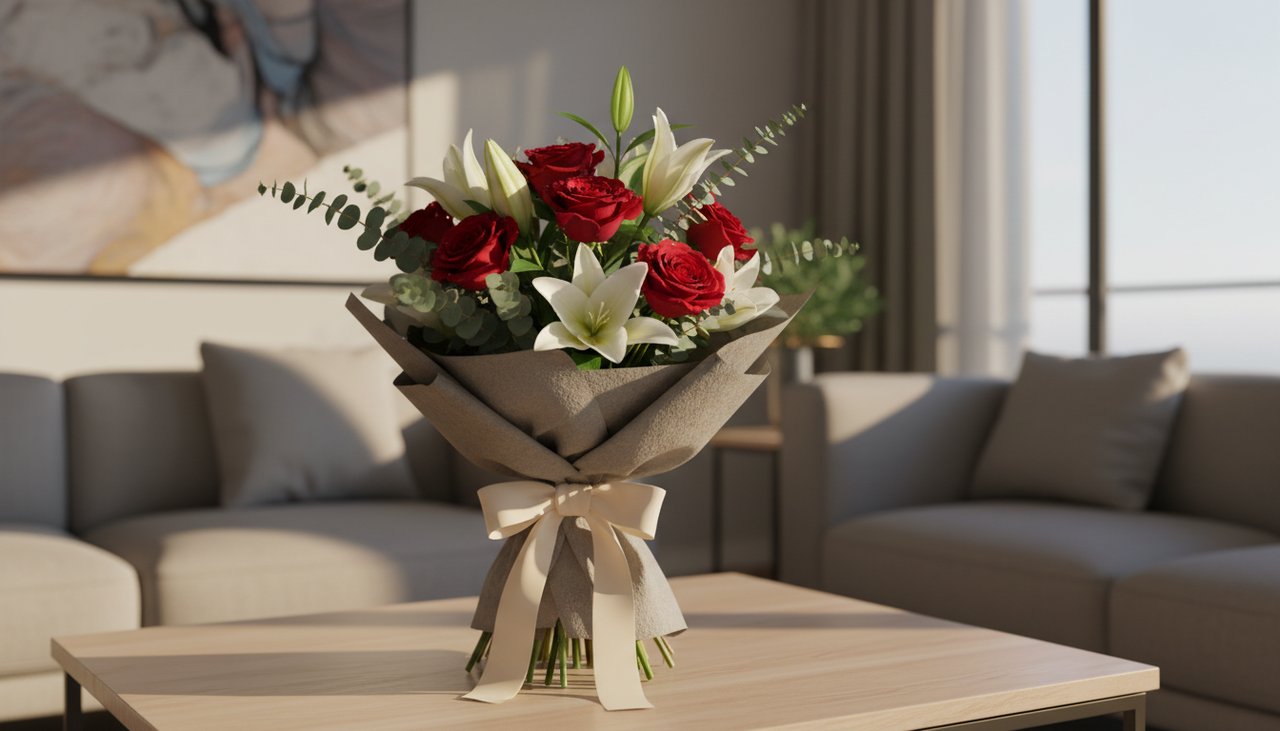
Flowers are one of the oldest systems of silent communication humans have ever used — and like any language, they have syntax, context, and the constant risk of mistranslation. This guide breaks down that system, from how symbols shift across history and cultures, to the practical rules for building arrangements that say exactly what you mean.
Floral Symbols Are Not Fixed
Before learning the rules, it helps to understand why they’re complicated in the first place.
Most people treat symbolic flower language as a static dictionary: red rose equals love, white lily equals purity. But flower symbolism functions more like a living language — constantly reshaped by cultural context, historical moment, and the intent of the giver.
Consider the red rose. In 19th-century Britain, a single stem was a silent, unequivocal declaration of romantic love. By the 20th century, the same flower had become an emblem of socialism and workers’ solidarity — held by activists, printed on political banners. Same flower, entirely different message, depending on who was holding it and why.
The sunflower tells a similar story. Across many cultures it represents loyalty, optimism, and long life. Then in 2022, it became the international symbol of Ukrainian resistance — a garden flower transformed overnight into a statement of national defiance.
The forget-me-not began as a private token between lovers facing separation. Over time it expanded into a symbol of collective memory, adopted during periods of political persecution in Germany, and more recently as the global face of Alzheimer’s awareness.
The point isn’t that flower meanings are arbitrary. It’s that meaning is always shaped by context — the cultural lens of the recipient, the occasion, and the specific combination of flowers you choose. Understanding this is the foundation of effective floral communication.
Define Your Intention First
Before you think about which flower or how many stems, start with a single question: what do you actually want this person to feel?
This sounds obvious, but most gifting mistakes happen because the sender skips this step and goes straight to aesthetics. A well-defined intention is the blueprint everything else follows.
To map your message, work through three questions:
- What is the core emotion? Not the occasion — the feeling. Gratitude is different from admiration. Sympathy is different from encouragement.
- What should the recipient feel after receiving it? Comforted? Celebrated? Understood? The desired outcome shapes the composition.
- What is the history of this relationship? A first gesture reads differently from a tenth-year acknowledgment. The context of your relationship sets the appropriate register — intimate, professional, warm, formal.
Without this clarity, even an expensive, beautifully arranged bouquet can feel generic. With it, a modest arrangement can feel precise and unforgettable.
Single Bloom or Bouquet
Once you know what you want to say, the next decision is the form.
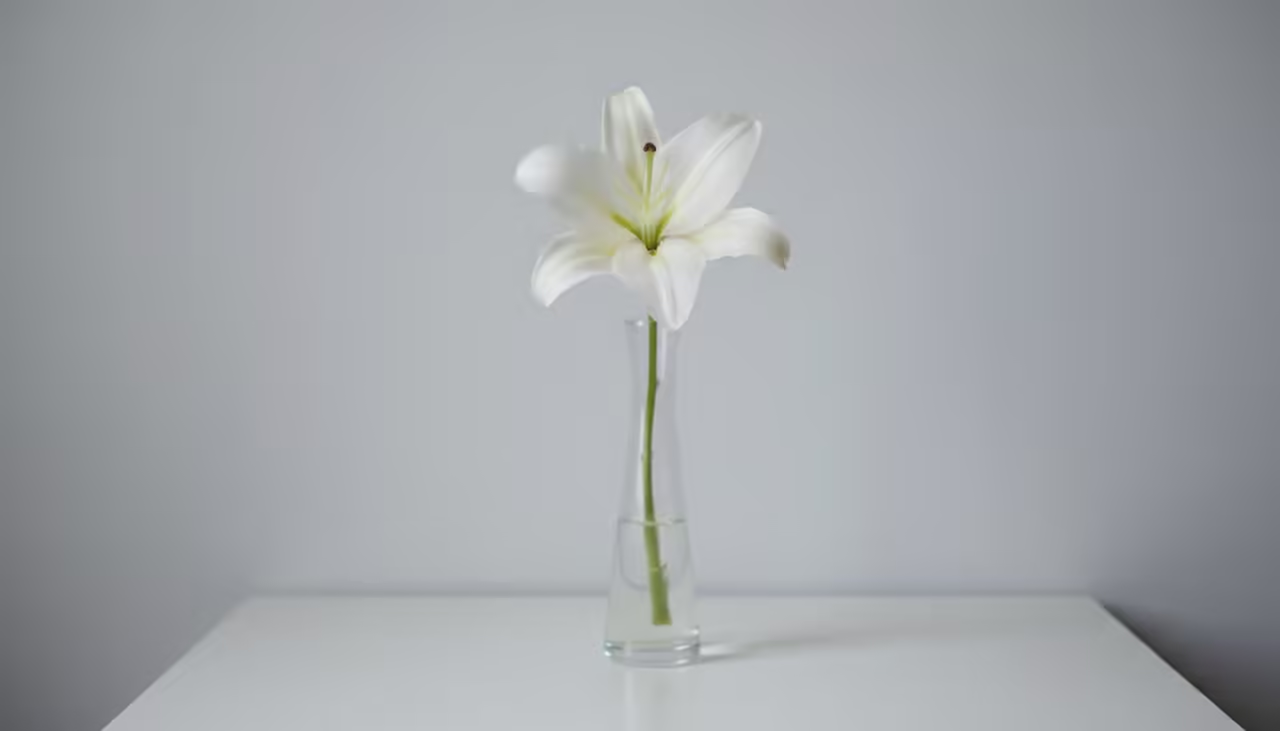
A single bloom is a masterclass in focus. It delivers one unambiguous statement, and its power comes from that isolation — the choice of a single stem implies that this flower is so precisely right it requires no accompaniment. A single white lily sent to someone in grief speaks with a directness that a crowded arrangement can actually obscure. A single long-stemmed rose on a first meeting signals focused interest without overwhelming.
Single blooms work best for intimate, one-on-one moments where the environment won’t swallow their quiet precision.
A bouquet is a different instrument entirely. If a single bloom is a declarative sentence, a bouquet is a paragraph — layered, nuanced, capable of holding more than one feeling at once. This is the right form for complex emotions, grander occasions, or any moment where a single note isn’t enough. A colleague’s promotion, a sincere apology, a milestone anniversary — these call for arrangements that can carry multiple simultaneous meanings.
To build an effective bouquet, think in three layers:
- The anchor — the primary flower that carries your main message
- The nuance — secondary flowers that add depth or supporting themes
- The cohesion — fillers and greenery that provide visual balance and connect the elements
The Grammar of Combining Flowers
This is where most guides stop at theory. Here’s how it actually works in practice.
Combining flowers is structurally similar to constructing a sentence. The primary bloom is the subject — it sets the central theme. Supporting flowers act as adjectives, modifying and adding dimension to the main idea. Color sets the emotional register. Form and texture set the tone of voice.
Symbolic harmony is the simplest approach: pair flowers whose meanings reinforce each other to create a single amplified message.
- Lavender (devotion) + rosemary (remembrance) = devoted remembrance
- White camellias (loveliness) + dark pink roses (gratitude) = pure appreciation
- Peonies (prosperity) + white roses (reverence) = a layered wish for lasting success and quiet respect
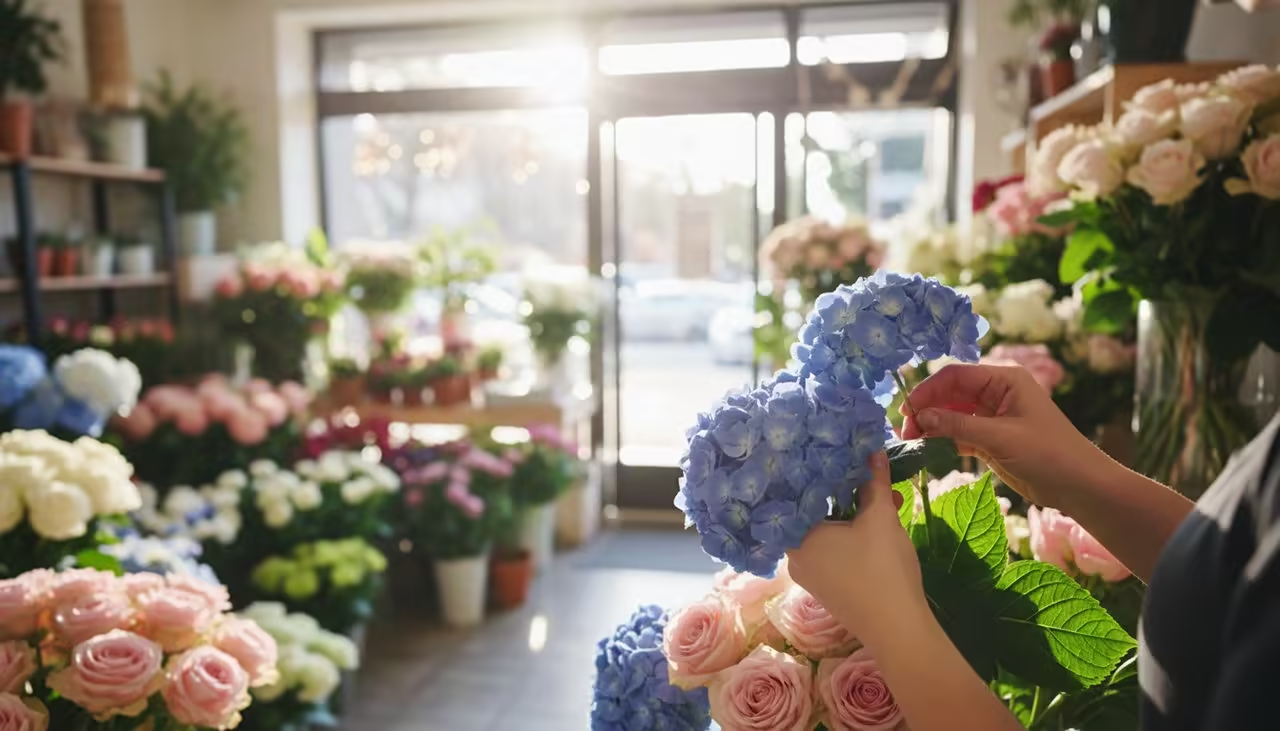
Contrast and complexity is the more advanced move: blending flowers with different emotional registers to capture the kind of feeling that doesn’t fit a single word.
Blue hydrangeas carry a visual weight — broad, solid clusters that read as steadfast and persevering. Pair them with white lilies, whose soft open petals suggest sympathy and peace, and you have “steadfast support mixed with gentle concern.” The hydrangea is the strong shoulder; the lily is the comforting hand.
Forget-me-nots (memory, longing) combined with sunflowers (loyalty, looking forward) creates something harder to name — nostalgia for the past held alongside genuine hope for what comes next.
Color as mood works independently of species. Deep red reads as passionate and intense. Adding white baby’s breath to a red rose arrangement introduces a note of innocence that softens the declaration. Pink signals warmth without weight. Pale yellow leans into friendship and optimism, while deeper yellows can feel more celebratory.
Quantity as emphasis is a layer that operates on its own register. A single stem is a statement of precision; three stems suggest “past, present, and future” in Western symbolic tradition; a dozen has long signaled completeness and abundance. Understanding number symbolism in China is equally important; for instance, while 9 roses signal eternity in China, certain numbers are avoided. Cultures vary meaningfully on stem counts, though — if you’re gifting across cultures, it’s worth checking local conventions before finalizing the number.
Practical Scenarios
The grammar above works best when applied to specific situations. Here are arrangements built for real moments:
Professional congratulations
To say “I believe in your success and your continued strength” — combine yellow tulips (cheerful optimism) with gladiolus (strength of character). The tulips announce the joy; the tall, upright gladiolus adds a layer of genuine respect for the recipient’s integrity.
A friend in recovery
To express “gentle strength and peaceful healing” — pair white orchids (resilience, quiet safety) with chamomile (patience in adversity). The orchid provides a calm, sturdy backbone. The small daisy-like chamomile offers softness and the message that recovery doesn’t need to be rushed.
A sincere apology
To convey “I am genuinely sorry and I want to do better” — white tulips (forgiveness, a request for a clean slate) combined with blue hyacinths (sincerity of regret). The tulips ask directly. The hyacinths confirm the ask is real.
A long-overdue thank you
To communicate “I should have said this sooner, and I mean it” — dark pink roses (deep gratitude) paired with purple lisianthus (appreciation with quiet reverence). The combination carries weight without being effusive.
How to Prevent Misreading
The more complex the arrangement, the higher the risk that the recipient misses the point. A few practical steps close that gap.
Check for cultural overrides. Some flowers carry associations strong enough to override your personal intent entirely. White chrysanthemums, for instance, read as a mourning gesture in many Asian cultures regardless of what you meant by them — a particularly common pitfall when arranging a sending flowers into China without local knowledge. These aren’t edge cases; they’re the standard trap for anyone gifting across cultural contexts.
Use a note strategically. You don’t need to explain every flower, but a line like “I chose these specifically for what they mean” signals to the recipient that there’s a layer worth noticing. It shifts the gift from decorative to intentional.
Consider the physical arrangement itself. A tight, formal bouquet reads as traditional and structured. A loose, wild arrangement reads as free and spontaneous. A single tall stem rising above a low cluster of shorter blooms isn’t just aesthetic — it reads as something standing above something else. The physical composition is part of the message.
Match the vessel and setting to the tone. A minimalist glass vase signals modern restraint. An ornate ceramic vessel implies tradition. Flowers delivered to an office are a public gesture; flowers delivered to a home are intimate. These environmental factors amplify or modify your original intent in ways that are easy to overlook.
A Final Note
The goal of all of this isn’t to turn flower-giving into an academic exercise. It’s to close the gap between what you feel and what actually arrives.
When you’re deliberate about intention, form, combination, and context — when the number of stems is right, the species are chosen for what they mean rather than how they look, and the arrangement reflects something true about the relationship — a bouquet stops being a transaction and becomes a communication.
That’s when flowers do what they’ve always done best: say the things that words make clumsy.
Common Questions
Advanced flower language involves combining different types of flowers to create complex messages, similar to how words form sentences, allowing for deeper emotional expression beyond the meaning of individual blooms.
To craft a meaningful floral arrangement, consider combining flowers with complementary meanings, using principles like symbolic harmony and contrast to convey nuanced emotions.
The Victorian era saw floriography flourish as a discreet communication tool, where elaborate flower arrangements, known as tussie-mussies, conveyed intricate messages without spoken words.
Yes, while specific flower meanings can vary between cultures, the underlying principle of combining blooms to create a nuanced narrative remains universal.
The physical attributes of flowers, such as color, form, and arrangement, function as visual syntax that impacts the overall message, influencing how it is interpreted.