Every year, millions of couples separated by oceans mark Qixi without being in the same room. The flowers you send that day aren’t just flowers — they’re proof you know where you are on the lunar calendar when most Westerners don’t. Sending Qixi flowers to China during this period is more than a simple transaction; it is a way to show you understand the recipient’s world.
The Story Behind the Date
Qixi is rooted in the legend of the Cowherd and the Weaver Girl — two stars separated by the Milky Way, permitted to meet only once a year on the seventh day of the seventh lunar month. It is one of China’s oldest stories about love across distance, and it still resonates strongly with anyone maintaining a long-distance relationship today. The famous Song dynasty poet Qin Guan once wrote that if two hearts are truly one, they do not need to be together every single day. For anyone ordering flowers across twelve time zones, that line hits differently.
Lunar Calendar Timing
Qixi follows the lunar calendar, which means the date changes every year. It usually lands sometime in August, creating a specific challenge for anyone sending flowers abroad. You have to account for both the shifting date and the significant time difference between the West and China. Qixi 2026 falls on August 19. If you are in London or New York and wait until the actual morning of Qixi to order, the day is already winding down in China. The peak demand for high-quality flowers in hubs like Kunming begins long before the festival starts. To get the best selection, you need to plan ahead.
Successful delivery depends on timing. We suggest placing your order at least three days in advance. This ensures you secure high-quality imports and a spot in the morning delivery circuit before the holiday rush causes logistical delays in major cities. This is especially true for Shanghai festival delivery around Lujiazui and the central business districts, where demand often exceeds local courier capacity during peak festivals.
Flower Selection and Cultural Meaning
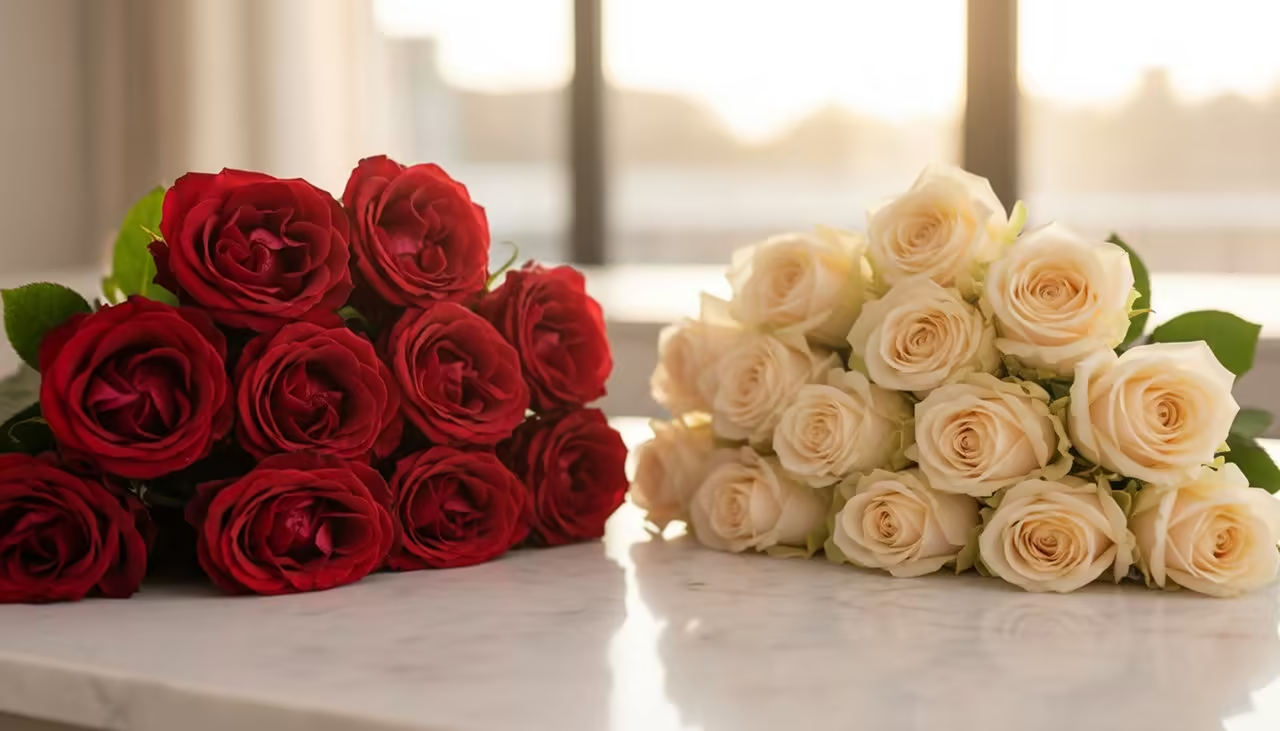
In China, the type of flower you choose says a lot about your intentions. Luxury floral gifts are often judged by their origin and appearance. Understanding these nuances helps you send a message that resonates with the recipient’s expectations. Ecuadorian roses are often seen as the gold standard for high-end gifting. Grown in volcanic soil at high altitudes, they have very large heads and long stems that make a powerful impression. In a professional environment like an office tower near Beijing’s Guomao CBD, specialized Beijing office delivery ensures these roses serve as a clear sign of significant emotional investment. Champagne roses offer a more understated alternative. Their soft cream and apricot tones appeal to those who value elegance over a bold display. While red roses represent intense passion, Champagne roses suggest a more sophisticated and intellectual connection.
The Significance of Stem Counts
The number of flowers in your bouquet is never an arbitrary choice. In Chinese culture, specific numbers act as a declaration of where the relationship is headed. These counts are deeply connected to the principles of Chinese number symbolism, where certain digits carry real weight in social and romantic contexts.
- 11 stems represent complete devotion to one person. This is a compact, elegant bouquet — easy to carry and display on a desk.
- 33 stems signify a bond that lasts for three lifetimes. Visually, this fills a standard vase and makes a clear statement without overwhelming a room.
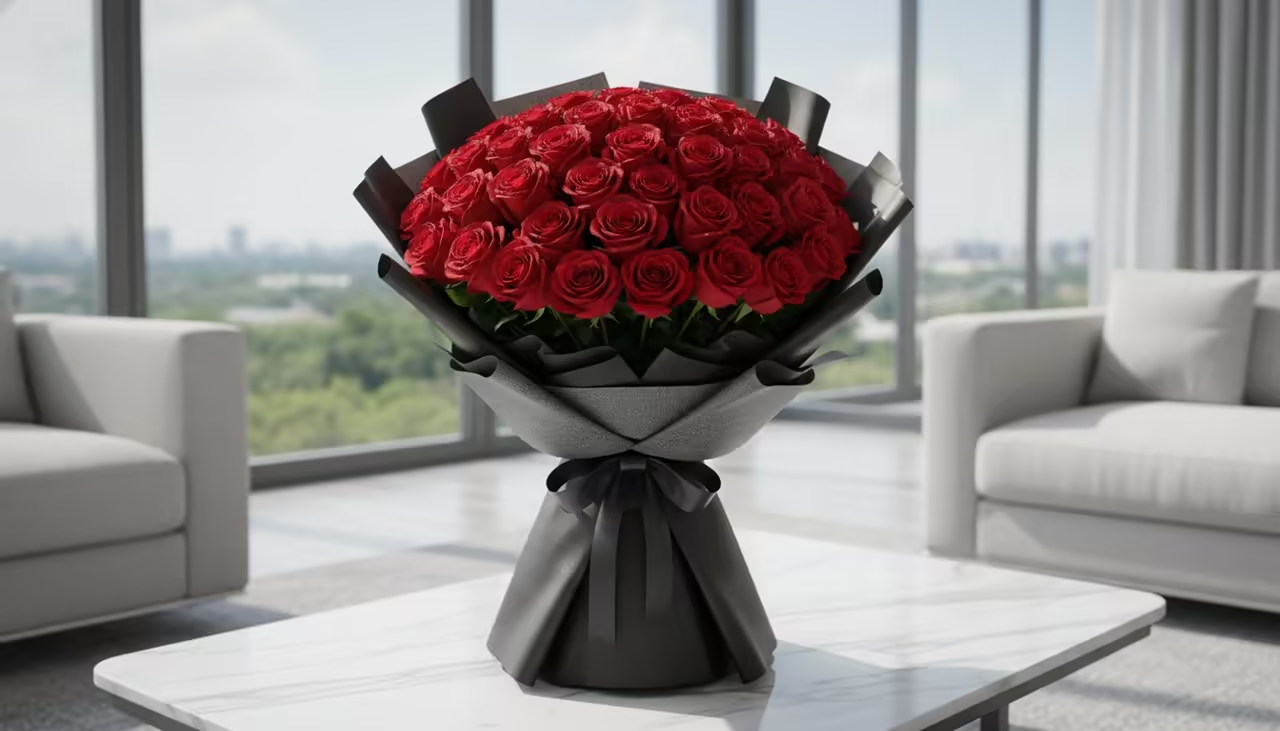
- 99 stems are a wish for a love that never ends. A bouquet this size is roughly the width of a person’s arm span — it cannot be ignored when it arrives at an office, which is part of the point.
It is important to be aware of certain taboos. The number four is avoided because its pronunciation is similar to the word for death. Also, while red and white arrangements are common in the West, they can carry associations with mourning in China — sticking to classic romantic colors is always the safer choice.
Modern Chinese Style
There is a growing preference for what designers call the New Chinese Style. This movement moves away from plastic wraps and synthetic ribbons, favoring materials that reflect the region’s rich artistic history. The philosophy extends to the materials themselves. Instead of cellophane, bouquets are often wrapped in Xuan paper, a soft, handmade medium traditionally reserved for calligraphy. The aesthetic is further elevated with structural elements like delicate bamboo weaving or the rich texture of silk brocade.
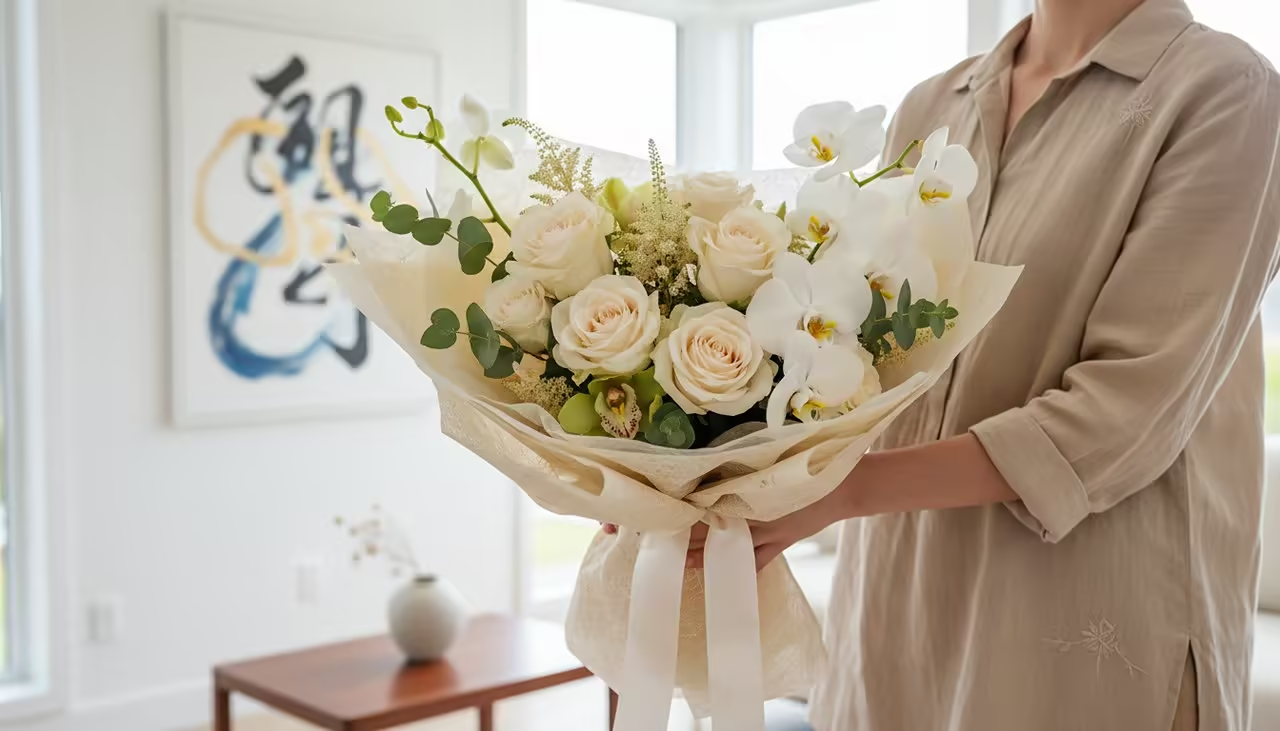
Color palettes are equally intentional. A common pairing sets deep rouge crimson against pine green for a grounded, classical feel. Another option uses imperial yellow with accents of lapis lazuli blue, creating something bolder and more regal. Choosing this style shows you have taken the time to understand the recipient’s aesthetic language.
The Importance of Delivery Timing
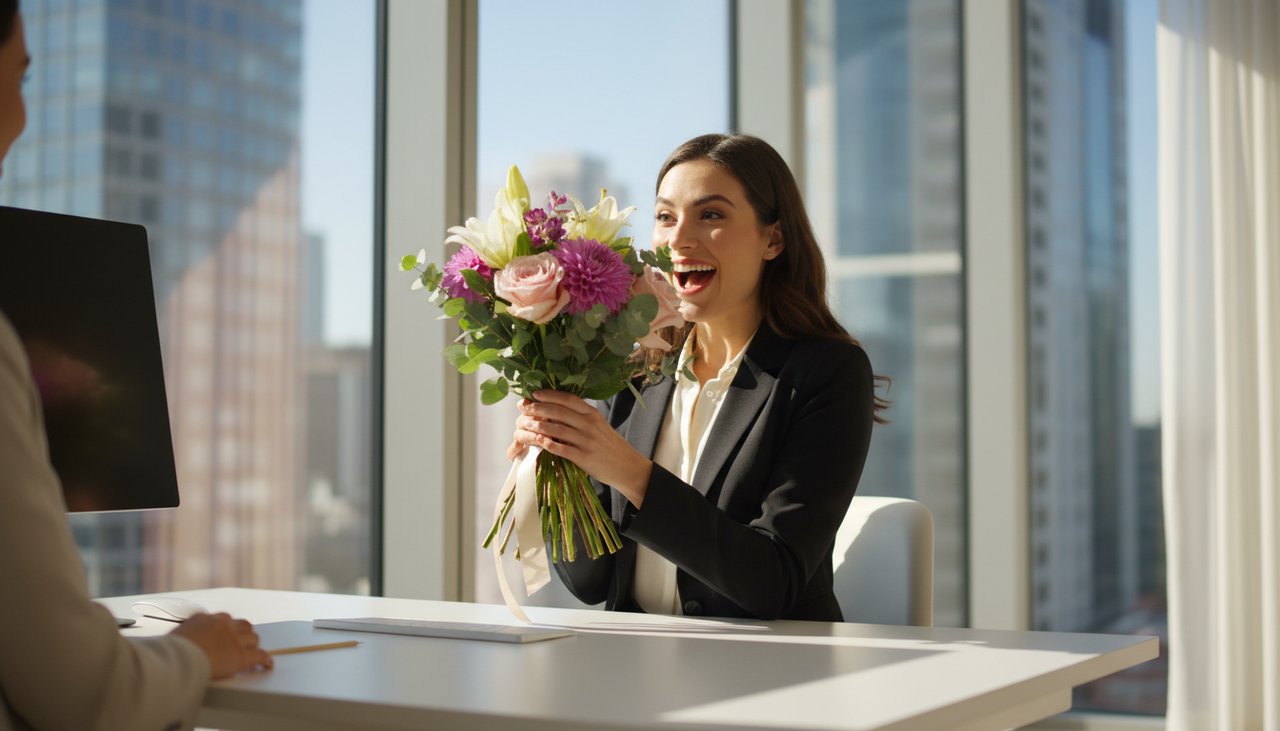
The moment the flowers arrive is the final part of the process. In the high-energy environment of a major Chinese metropolis, the timing of the delivery fundamentally alters how the gift is perceived. Morning delivery is excellent for social validation. When flowers arrive at an office early in the day, they create a sense of anticipation and excitement among colleagues. In cities like Shenzhen or Guangzhou, where the work culture runs fast, a bouquet landing on someone’s desk by 10am becomes the talking point of the floor. Evening delivery serves a more private purpose. As the workday ends, flowers arriving at a home offer a peaceful transition into a personal space. It signals that despite the different time zones, you are thinking of them at the exact moment they seek rest and connection. A practical note on timing: China Standard Time (UTC+8) is 12 hours ahead of US Eastern Time (e.g., EDT, UTC-4). Your late-night order is already their next business day, so planning is critical.
Order three days early, choose Xuan paper wrapping, and specify morning or evening delivery based on the impression you want to make. With Qixi 2026 on August 19, if you’re ready to plan ahead, explore our same-day delivery options across China's major cities. The calendar won’t wait.
Common Questions
At this stage, checkout creates an order request only. No payment is collected on the website. After we confirm availability and delivery timing, our support team will email the available payment instructions for your order.
Ecuadorian roses are widely regarded as the pinnacle of luxury floral gifts. Cultivated at high altitudes, their impressively large heads and long stems convey a powerful message of significant emotional investment, particularly in professional settings.
Champagne roses, with their delicate cream and apricot hues, symbolize understated elegance and a sophisticated, intellectual connection. They offer a refined alternative to the intense passion often associated with classic red roses.
Yes, stem counts carry profound cultural meanings. 11 stems represent complete devotion, 33 signify a bond lasting three lifetimes, and 99 express a wish for eternal love. Crucially, avoid the number four, as its pronunciation is linked to death.
White is strongly associated with funerals and mourning, making it generally unsuitable for celebratory occasions. White chrysanthemums, in particular, should be avoided entirely unless sending condolences. For joyful events, opt for vibrant reds, pinks, or oranges.
The New Chinese Style emphasizes natural, artisanal materials over synthetics. Bouquets are often wrapped in traditional Xuan paper, accented with delicate bamboo weaving or silk brocade, and feature intentional color palettes like deep crimson with pine green, creating an artistic and culturally appreciative statement.
Qixi is deeply rooted in the ancient legend of the Cowherd and the Weaver Girl, celestial lovers separated by the Milky Way and permitted to meet just once a year. It's a poignant, enduring tale celebrating love and connection across distance, especially relevant for long-distance relationships.
Yes, delivery timing significantly shapes perception. Morning delivery to an office creates anticipation and social validation among colleagues. Evening delivery to a home offers a private, peaceful transition, signaling connection as the recipient seeks rest after their workday.