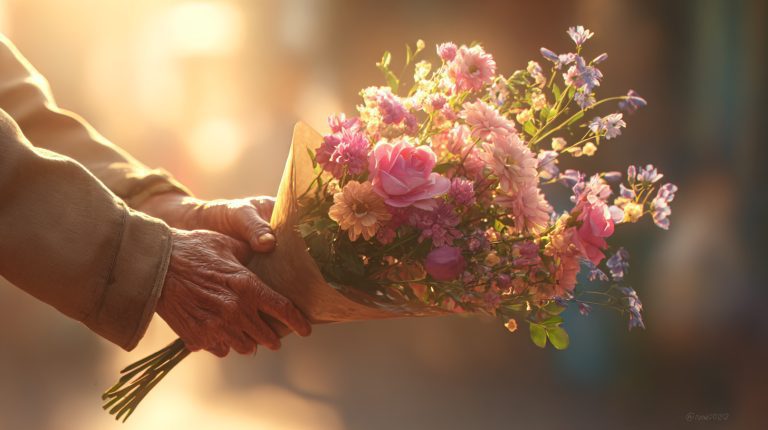
Delivering flowers across China is essentially a logistical hand-off from the high-altitude farms of Yunnan to the fast-paced delivery networks of major cities. It’s a tight window; the goal is to preserve the field-fresh quality of the stems as they move across different climate zones and transit points. For those ordering from abroad, managing the time difference and ensuring local timing is correct can be a challenge. Relying on specialized support like helps bridge that gap, making sure the bouquet arrives at its peak right when it’s expected.
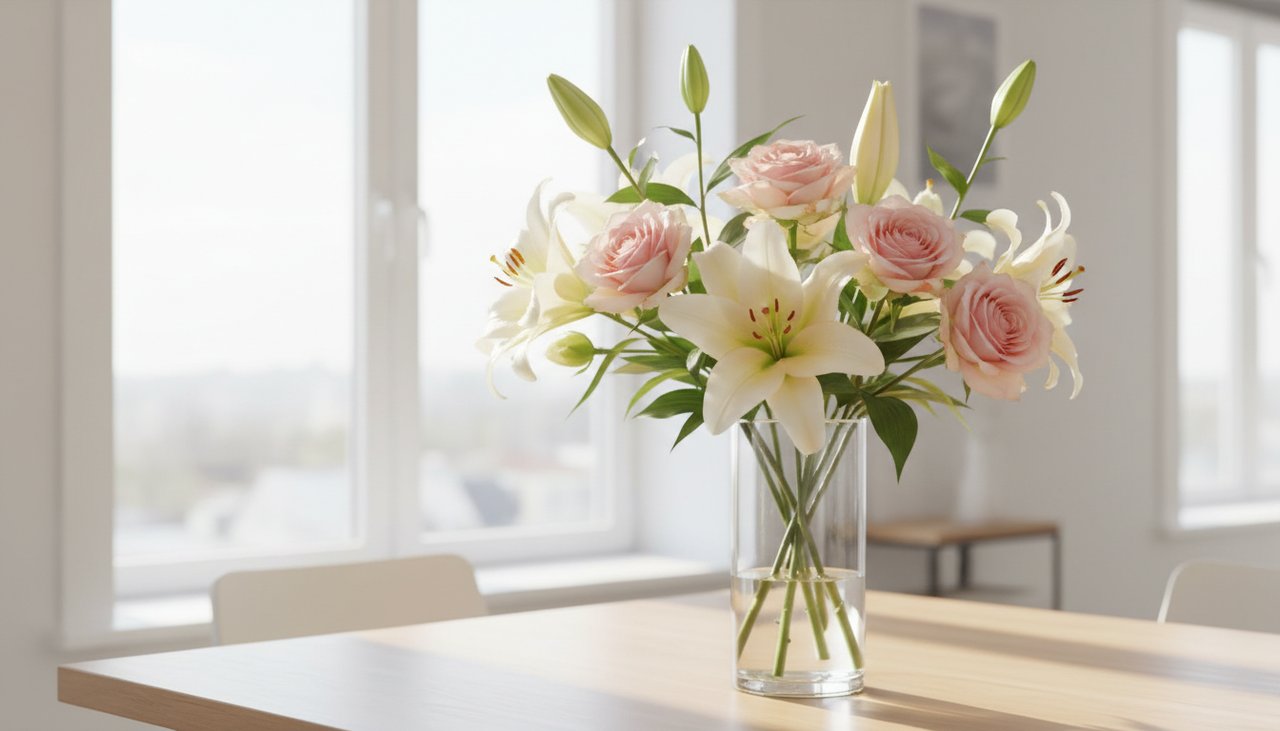
Birthday Lilies
In Chinese floral circles, the maturity of a lily bud tells a story. When sending these for an elder’s birthday, we usually look for stems where the blooms are only partially open. It’s a subtle nod to vitality and the years still to come; a lily in full, wide-open bloom can sometimes carry the unintended suggestion that the peak has already passed. For peers or partners, a mix of open flowers and firm buds is the standard, ensuring the arrangement stays fresh for more than just a day or two.
One practical detail that separates a high-end florist from a generic shop is stamen management. We make sure to pinch out the pollen-heavy stamens as soon as the flower begins to open. This isn’t just about aesthetics—it prevents that stubborn yellow dust from staining the white petals or the recipient’s furniture.
The number of stems you choose is rarely random in a birthday gift:
- 6 stems: This follows the “liu liu da shun” principle, wishing the recipient a smooth, obstacle-free year ahead.
- 9 stems: Chosen for its phonetic link to “permanence,” making it a classic choice for longevity and lasting health.
- 11 stems: A modern favorite for partners, representing “wholeheartedness” or being “the only one,” a sentiment also reflected in the traditions surrounding .
The Shift in Yunnan Varieties
The market in Yunnan has shifted noticeably toward a more understated, desaturated palette. The Luo Shen rose series is the best example of this change; its dusty pink and champagne tones have largely pushed out the vibrant reds that used to define the market. These roses have a muted, painterly quality that feels much more in line with classical Chinese aesthetics than the high-gloss varieties of the past.
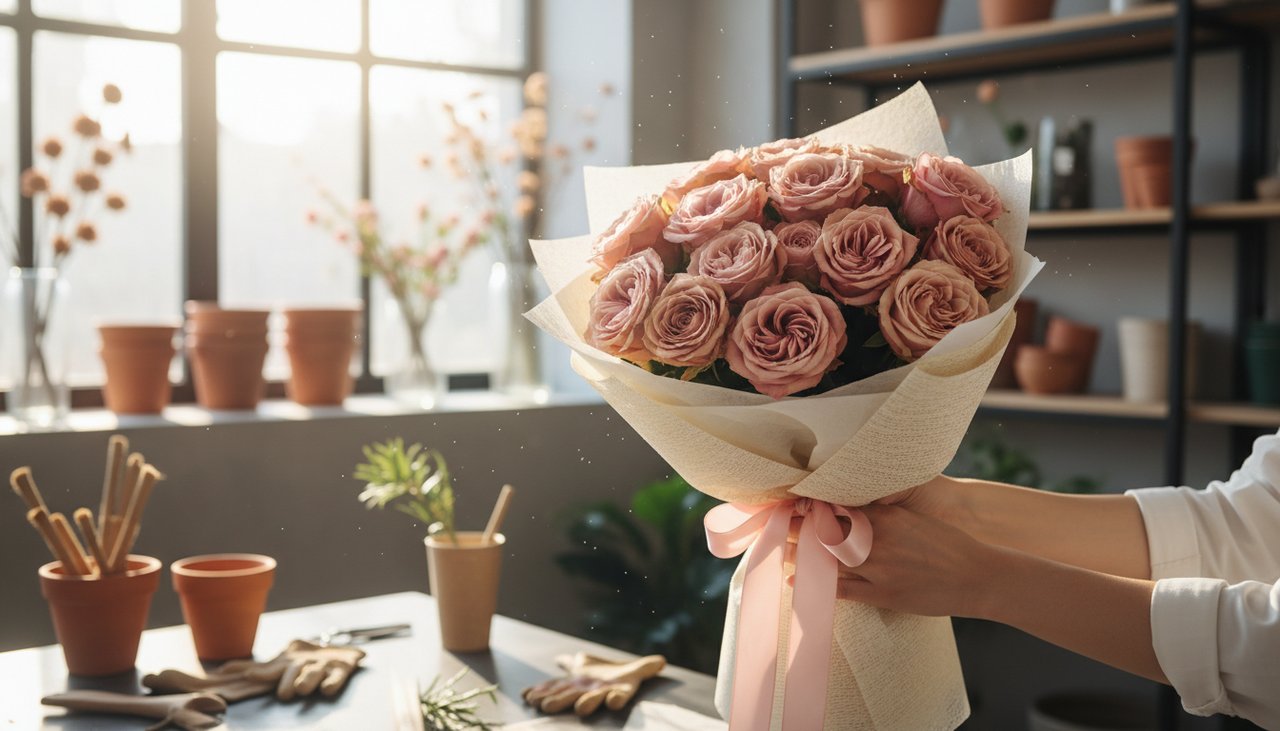
Beyond roses, alpine hydrangeas sourced from the Jade Dragon Snow Mountain region are becoming central to the “New Chinese” (Xin Zhong Shi) style. This look is a revival of the *Ping Shi* (scholarly) tradition, which values the natural, often irregular character of a plant over forced symmetry. It’s a more intentional way of arranging that highlights the “imperfections” found in nature.
This aesthetic carries through to the packaging. We’re seeing a move away from generic materials toward Xuan paper and silk ribbons in traditional shades like *Dai* (a deep cyan-black) and *Yanzhi* (cochineal). By leaning into these textures and historical colors, a bouquet stops being a simple commodity and starts feeling like a curated piece of art, where the atmosphere and the form of the stems matter more than the sheer number of flowers in the wrap.
Freshness Standards
In the premium delivery market, we judge quality by the “Dushui” standard (度水标准). It’s essentially a measure of how well a flower has maintained its hydration and cellular tension after the journey from Yunnan. When a box is opened, the petals should feel cool and firm to the touch, showing none of the limpness or “travel fatigue” usually associated with long-distance shipping.
Achieving this requires precise environmental management. During the humid summer months, the focus is on preventing heat-induced rot and petal browning caused by friction, while winter transit requires a different balance to avoid dehydration or freezing in the drier northern climates.
The Dushui standard is about preserving the physical integrity and “water-filled” state a flower has the moment it’s harvested in the highlands.
To protect delicate varieties, we use suspended packaging systems. These use internal supports to lock the bouquet in place, ensuring the flower heads never actually touch the sides of the container, which is where most bruising occurs. To keep the stems hydrated and the environment stable, we rely on a few specific components:
- High-molecular moisture cotton is wrapped around the stems to provide a steady water supply without the mess of traditional vials.
- Vapor-release inserts are used to regulate the micro-climate inside the box, keeping humidity levels consistent.
- Anti-tipping frames ensure the arrangement stays upright throughout the entire logistics chain, even during high-speed sorting.
Classical Symbolism
Current design trends are drawing heavily from the Ming Dynasty Ping Shi (Treatise on Vases) tradition. In practice, this means moving away from the dense, round bouquet and toward a more skeletal structure. We use Nandina berries and pine branches to establish a “bone” for the arrangement; these woody elements provide a sense of permanence and weight that soft-petaled flowers can’t carry alone.
There is a specific logic in pairing a contemporary cultivar like the Luo Shen rose with these traditional branches. The rose brings the modern color palette, while the Nandina anchors it in a historical context. The result is less of a standard gift and more of a scholarly installation—an arrangement intended to sit in a quiet corner of a home rather than just being a temporary centerpiece.
For those marking their Benmingnian (Zodiac Year), the palette is strictly vermilion and gold. To keep this looking sophisticated rather than dated, we lean into deep, saturated reds—varieties like Huo Ling (Fire Spirit) or Kardinal roses—complemented by brass accents. This combination respects the cultural tradition of completing a twelve-year lunar cycle while maintaining the clean, architectural lines expected in premium floral work.
Logistics & Timing
Timing a delivery depends largely on where the flowers are going. For Tier-1 hubs like Beijing, Shanghai, or Guangzhou, a 24-to-48-hour lead time is usually sufficient to tap into the local “last-mile” delivery circuits. In these cities, the infrastructure is fast enough that the transition from the climate-controlled hub to the recipient’s door is relatively seamless.
For inland provinces or smaller regional cities, the timeline needs to stretch. We recommend ordering at least 3 to 5 days in advance. This isn’t just for transit time; it’s a necessary buffer for the extra hand-offs inherent in a hub-and-spoke logistics network. Giving it a few extra days ensures the arrangement isn’t rushed through sorting centers where temperature control might be less consistent than our own facilities.
The most important variable, however, is the holiday calendar. During peak windows like Chinese New Year or National Day, the entire national courier network operates at or above capacity. To guarantee a delivery slot during these weeks, a seven-day head start is the only way to ensure the order is prioritized before the logistics chains become fully saturated.
Common Questions
Ensuring peak freshness for flowers traversing China's diverse climates involves stringent standards. Look for florists who adhere to the 'Dushui' standard, guaranteeing flowers maintain optimal hydration and cellular tension from harvest to delivery. Premium services employ suspended packaging systems, high-molecular moisture cotton around stems, vapor-release inserts for climate control, and anti-tipping frames to prevent bruising and maintain the arrangement's integrity during transit.
The maturity of lily buds carries subtle meaning in Chinese floral etiquette. For elders, choose stems with partially open blooms, symbolizing vitality and a future yet to unfold. For peers or partners, a mix of open flowers and firm buds is ideal, ensuring lasting freshness. A hallmark of high-end floristry is the meticulous removal of pollen-heavy stamens as blooms open, preventing unsightly stains on petals or furniture.
Absolutely. The number of stems often carries symbolic weight. Six stems are chosen for 'liu liu da shun,' wishing a smooth, obstacle-free year. Nine stems signify 'permanence,' conveying wishes for longevity and enduring health. For partners, eleven stems are a modern favorite, representing 'wholeheartedness' or being 'the only one.'
Contemporary Chinese floral design leans towards an understated, desaturated palette, exemplified by the popular Luo Shen rose series with its dusty pink and champagne tones. This 'New Chinese' (Xin Zhong Shi) style, a revival of the *Ping Shi* (scholarly) tradition, favors natural, often irregular forms over forced symmetry. Alpine hydrangeas from the Jade Dragon Snow Mountain are also central to this aesthetic, creating arrangements with a muted, painterly quality.
Lead times vary by destination and season. For major Tier-1 cities like Beijing, Shanghai, or Guangzhou, 24 to 48 hours is typically sufficient. For inland provinces or smaller regional cities, allow 3 to 5 days to accommodate additional logistical hand-offs. During peak holiday periods such as Chinese New Year or National Day, a minimum of seven days' notice is essential to guarantee delivery before courier networks become saturated.
For a Benmingnian, the color palette is traditionally strict: vermilion and gold. To achieve a sophisticated interpretation rather than a dated look, premium florists utilize deep, saturated reds like Huo Ling or Kardinal roses, complemented by subtle brass accents. The design maintains clean, architectural lines, respecting cultural tradition while upholding modern luxury aesthetics.
Premium packaging transcends mere protection; it's an integral part of the artistic presentation. Expect a departure from generic materials, with a focus on Xuan paper and silk ribbons in traditional shades like *Dai* (deep cyan-black) and *Yanzhi* (cochineal). Beyond aesthetics, advanced techniques like suspended packaging systems, ensuring flower heads never touch the container sides, are employed to preserve the arrangement's pristine condition.