Sending Lunar New Year flowers from overseas has one consistent failure point: cultural mismatch. The wrong bloom, the wrong number of stems, or a delivery that misses the festival window entirely turns a considered gesture into an awkward one. This guide covers what to send, what to avoid, and how local fulfillment solves the logistics of celebrating Chinese New Year from abroad.
A well-chosen bouquet carries a specific wish — for prosperity, resilience, or family harmony — in a visual language refined over centuries. Understanding the symbolism of flowers in Chinese culture is what separates a generic gesture from one that lands. Cultural precision is the requirement, not just good intentions — and that applies equally to sending gifts to China from USA and any other origin.
Why Floral Symbolism Defines the Lunar New Year
The Lunar New Year is an occasion where every object and color carries assigned meaning. Gifting is a central pillar of Chinese New Year traditions — a vehicle for explicit wishes about the months ahead. Flowers participate in this tradition through a shared visual vocabulary: each bloom signals something specific, and recipients read that signal.
Sending flowers to China during this festival is a cultural statement as much as a personal one. To do this well, you need to understand the cultural considerations for sending gifts to China at the level of individual blooms, not just general etiquette.
Which Blooms Best Convey Your Intentions
Matching the flower to the recipient’s life stage is what distinguishes a knowledgeable sender from one who simply bought the most expensive arrangement available. Each of the traditional Chinese flowers for new year carries a distinct meaning.
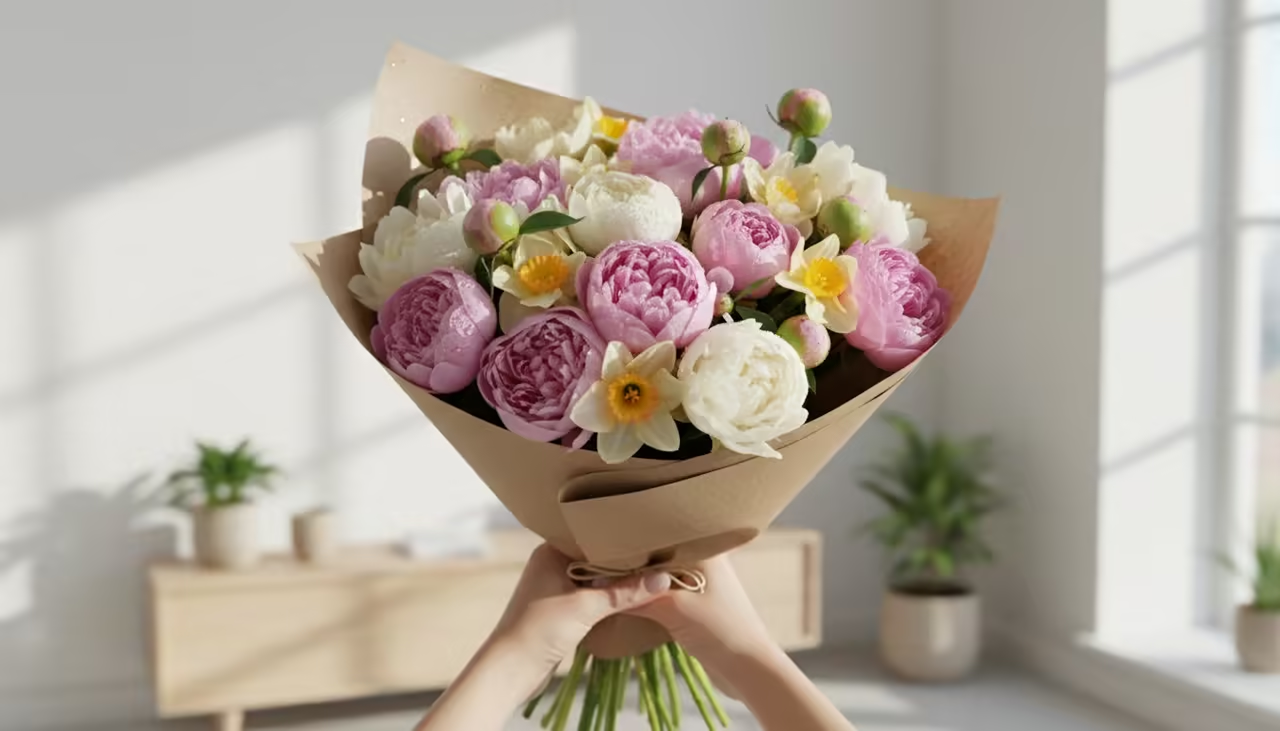
The Peony for Wealth and Command
- Historical Context: Known as the King of Flowers, the peony reached its peak popularity during the Tang Dynasty as a symbol of imperial opulence.
- Gifting Insight: The premier choice for business partners or senior family members. It communicates a specific wish for Fugui — wealth and high social status. For a deeper analysis of how this plays out in professional settings, see our case study on gifting for business partners.
The Orchid for Refinement and Abundance
- The Contrast: If the peony signals wealth and status, the orchid signals integrity and quiet strength — the scholar to the king.
- Gifting Insight: Well-suited for friends or colleagues. Orchids convey a wish for professional excellence and family prosperity without the overt display of the peony.
Plum Blossoms and Narcissus
Plum blossoms bloom in bitter cold — a direct visual argument for resilience under pressure. They work well as a tribute to a recipient navigating a difficult year or a demanding role.
The narcissus operates on timing logic: if it blooms on New Year’s Day, it is read as an omen of exceptional wealth for the year ahead. Order narcissus with enough lead time — at least a week before the holiday — so the recipient has the option to slow or accelerate the bloom by adjusting the water temperature. Cool water delays opening; room-temperature water speeds it up. Ordering early hands that control to them.
Red Roses and the Chrysanthemum Rule
Red roses are increasingly accepted during the New Year period — red is the definitive auspicious color. When gifting to relatives rather than a romantic partner, pair them with traditional greenery or pussy willow to remove the romantic association.
One Absolute Prohibition
White or yellow chrysanthemums are strictly reserved for funerals and mourning. Their appearance in a New Year arrangement causes genuine distress. No exceptions, no workarounds.
Regional Preferences
For recipients in southern cities like Guangzhou, locally favored options include kumquat trees (年桔) — the name is a near-homophone for “yearly gold” — and cymbidium orchids (大花蕙兰), prized for their long bloom period throughout the fifteen-day festival.
Recipients in Beijing generally lean toward high-end greenhouse blooms: premium peonies, amaryllis, and forced-bloom plum branches suit formal northern households. Much of China’s fresh flower supply originates from Yunnan Province — Kunming’s Dounan Flower Market is the largest wholesale hub in Asia — which means northern deliveries travel farther from source and benefit most from same-city local sourcing.
Ensuring Flawless Delivery Within China
The flowers themselves don’t travel internationally. Your order is routed to a professional local florist in the recipient’s city, who sources, arranges, and delivers within the same district. This bypasses long-distance shipping risk and ensures the arrangement is handled by someone familiar with local preferences.
China’s geography produces distinct floral cultures. Southern cities favor tropical and subtropical varieties suited to warm, humid interiors. Those looking to send flowers to Beijing will find a preference for structured greenhouse blooms that hold well in heated northern apartments. An effective online florist for China leverages local partners in both regions — not a single centralized inventory. This local knowledge is explored further in our guide to Guangzhou’s floral landscape.
The Advantage of Local Sourcing
Local sourcing is what makes fast flower delivery to China viable during the holiday rush. Partner florists draw from regional supply chains, cutting the time between harvest and doorstep to hours rather than days.
Delicate blooms stay in peak condition through the entire fifteen-day festival — not just for the day of arrival.
Timing Your Order
Demand spikes sharply in the five days before Lunar New Year’s Eve. Florists operate at full capacity, popular blooms sell out, and same-day slots disappear.
Order at least five days before New Year’s Eve — that is the only reliable way to avoid the holiday logistics crunch.Please consider the time difference when requesting same-day delivery from abroad. Plan one calendar day ahead of what feels intuitive.
For recipients in multiple cities, place each order separately and confirm the local florist’s holiday cut-off directly. During peak periods, each city runs on its own schedule.
Common Questions
Key auspicious flowers for Chinese New Year include Peonies, symbolizing wealth, honor, and prosperity; Orchids, representing fertility, abundance, and refinement; Plum Blossoms, signifying resilience, perseverance, and hope; and Narcissus (Daffodils), associated with good fortune and prosperity, especially for career advancement.
Sending flowers to China for Chinese New Year serves as a tangible presence, expressing 'I am with you in spirit' and easing the pang of distance. This thoughtful act reinforces family ties and friendships, making loved ones feel cherished despite geographical separation.
While roses are universally recognized for love, their suitability for Chinese New Year gifts depends on the recipient. Red roses align with the auspicious color of the festival, signifying passion and good luck, making them more appropriate for romantic partners than general family greetings.
Specialized services simplify the process of sending flowers to China by navigating international payments, language barriers, and ensuring the freshness of delicate blooms. They offer a secure and streamlined way to order, leveraging local growers and florists to guarantee fresh, timely delivery.