Every major Chinese festival has its own floral shorthand — a set of blooms that match the spirit of the day, and others that would feel out of place or even inappropriate. Getting this right is often the difference between a gift that feels thoughtful and one that feels generic.
This guide walks through the major holidays in the Chinese calendar and the flowers that traditionally match each one, with notes on regional differences and how these conventions are shifting in contemporary practice.
The Silent Language of 花语
Before getting into the festivals, it helps to understand the concept sitting underneath all of them: 花语 (huāyǔ), literally “flower language.”
I once advised a client visiting his partner’s parents for the first time. He chose a bouquet of peonies, and the parents’ reaction was immediate warmth. He hadn’t just given them flowers; he had offered a wish for prosperity and honor, tapping into symbolism cemented back in the Tang Dynasty. That’s the power of huāyǔ — every flower carries a specific message, and the right one at the right moment reads as deeply considered.
Festival gifting sits at the intersection of huāyǔ and occasion. Each holiday amplifies certain floral meanings and dampens others, which is why the same flower that’s perfect for Lunar New Year can feel strange at Qingming. For the broader rules of color, stem count, and gifting etiquette that underpin all of this, see our companion guide on gifting flowers in China.
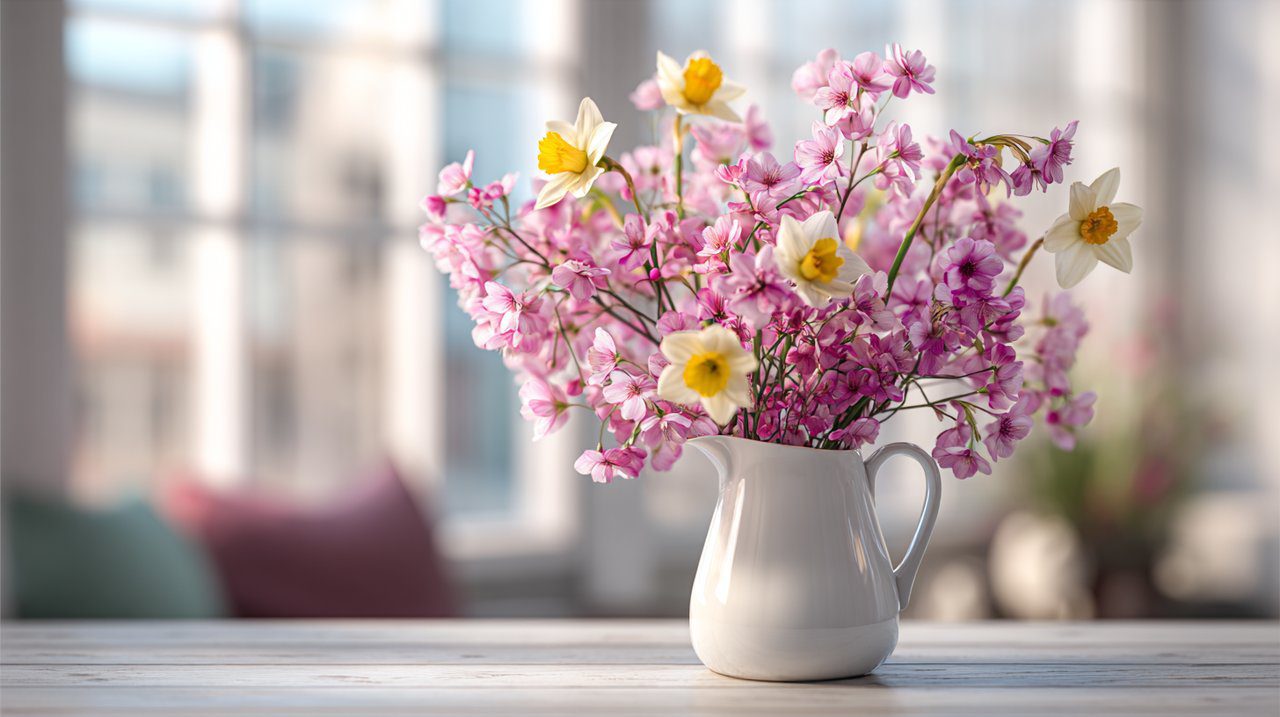
‘A flower’s fragrance is its soul.’ – Chinese Proverb
Spring Festival (Chinese New Year)
Lunar New Year is the most flower-intensive holiday on the Chinese calendar. The blooms chosen for this window are almost entirely about renewal, prosperity, and luck for the year ahead — and regional preferences vary significantly more than most overseas buyers expect.
In Shanghai and the broader Jiangnan region, narcissus (水仙) is the classic choice — its delicate white blooms and timing (flowering right around the New Year) make it an emblem of the holiday itself. Paired with pussy willow branches (银柳), the combination reads as elegant, understated, and deeply traditional.
Southern China, especially Guangdong and Hong Kong, leans into kumquat trees (金橘) and peach blossoms (桃花). The kumquat is a homophone play — its name contains 金 (gold) — while peach blossoms are tied to romantic luck and new beginnings, particularly favored by younger recipients.
In Sichuan and the inland west, red anthuriums (红掌) and other vivid red blooms dominate, matching a regional preference for bolder, fierier displays. The effect is maximalist by Shanghai standards, but entirely appropriate in local context.
Across all regions, orchids (蝴蝶兰) — particularly phalaenopsis — are the safest premium choice for corporate or formal settings. Their long bloom life and association with integrity make them a reliable cross-regional option.
Qingming Festival (Tomb-Sweeping Day)
Qingming is a solemn observance, and the floral conventions reverse almost everything that applies to celebratory holidays. This is the one festival where white and yellow chrysanthemums are not only acceptable but expected — they are the traditional flower of mourning and remembrance in Chinese culture, and Qingming is their moment.
White lilies are a secondary choice, carrying similar associations with peace and respectful farewell. Both are typically brought to ancestral graves or memorial sites rather than given to living recipients.
The critical point for overseas senders: a celebratory bouquet delivered to a Chinese household during the Qingming window can read as tone-deaf, even if the recipient isn’t personally observing. If you’re sending flowers for a non-Qingming occasion during early April, it’s worth noting the timing in the message.
Mid-Autumn Festival
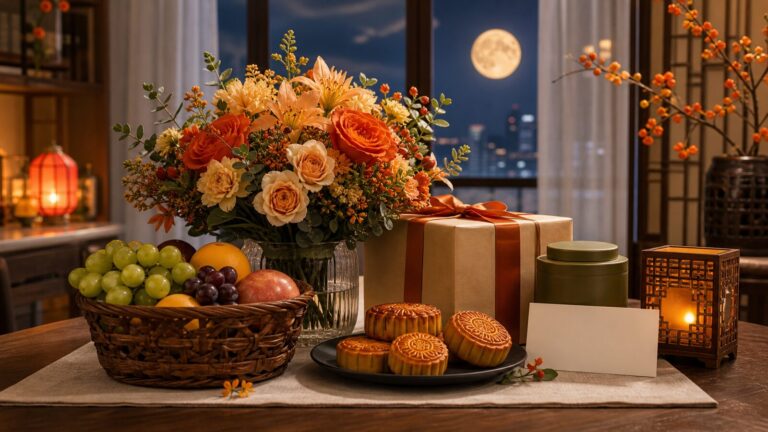
The Mid-Autumn Festival (中秋节) centers on family reunion, harvest gratitude, and the full moon. Flowers for this holiday tend toward warmer, autumnal palettes rather than the brightness of spring festivals.
Osmanthus (桂花) is the signature bloom. Its tiny golden flowers release a honeyed fragrance that peaks precisely in the mid-autumn window, and the flower is culturally tied to the legend of Chang’e and the moon. Gifting osmanthus — even in the form of osmanthus-scented tea or wine paired with a small bouquet — carries specific seasonal resonance.
Chrysanthemums in warm colors (yellow, bronze, deep red) are appropriate here, which is worth noting because they’re strictly avoided at celebratory events earlier in the year. The Mid-Autumn context shifts the reading: yellow chrysanthemums suggest the harvest rather than mourning.
Lotus blossoms (荷花) are sometimes included in more traditional arrangements, linking back to Buddhist imagery of the moon and enlightenment.
Dragon Boat Festival
The Dragon Boat Festival (端午节) is the least flower-centric of the major holidays — its traditions center on zongzi, dragon boat races, and protective herbs rather than decorative blooms. But the plant symbolism is still worth knowing.
Households traditionally hang sweet flag (菖蒲) and mugwort (艾草) over doorways during this festival. Sweet flag leaves resemble upright swords and are believed to ward off evil; mugwort carries medicinal associations and is said to repel insects and illness. These aren’t gift flowers in the Western sense — they’re protective botanicals tied to a specific ritual function.
If you’re sending a flower arrangement during this window, it’s safer to treat the occasion as a general greeting rather than a holiday-specific gesture. Pomegranate blossoms (石榴花), which bloom around this time, are sometimes included to nod to the season without forcing a Dragon Boat–specific theme.
Qixi Festival
Qixi (七夕) — sometimes called Chinese Valentine’s Day — has grown significantly as a commercial floral holiday in the last decade, especially among urban millennials and Gen Z. The core story is the annual reunion of the Cowherd and the Weaver Girl, and the floral language leans romantic.
Red roses remain the dominant choice, often in symbolically loaded stem counts (99 stems for eternal love, 11 for “you are my one and only”). In the last few years, champagne roses and Pink Diana roses have emerged as the more sophisticated alternative among younger buyers — still romantic, less commercial-feeling.
Baby’s breath (满天星) has become a Qixi-specific favorite, especially in aesthetically-driven arrangements posted to social media. It carries a softer, dreamier register that pairs well with the festival’s mythological backdrop.
Double Ninth Festival
The Double Ninth (重阳节, Chongyang), observed on the ninth day of the ninth lunar month, is a holiday for honoring elders and celebrating longevity. The number nine itself is auspicious — its pronunciation (jiǔ) echoes the word for “long-lasting.”
Chrysanthemums are the defining flower of this holiday, but in a completely different register from Qingming. Here they symbolize longevity and the dignified resilience that tradition associates with old age. Warm colors — gold, bronze, deep red — are preferred; large white chrysanthemums are avoided because of their funerary association even in this context.
A bouquet of nine yellow or bronze chrysanthemums sent to a grandparent on Double Ninth is a deeply traditional gesture — the flower, the color, and the stem count all reinforce the same wish for longevity.
Regional and Modern Variations
China is large enough that holiday floral conventions vary meaningfully across regions. Spring Festival in a Shanghai apartment doesn’t look like Spring Festival in a Guangzhou or Chengdu household. When in doubt, a quick look at what local flower markets are featuring for the season gives you direct insight into current preferences.
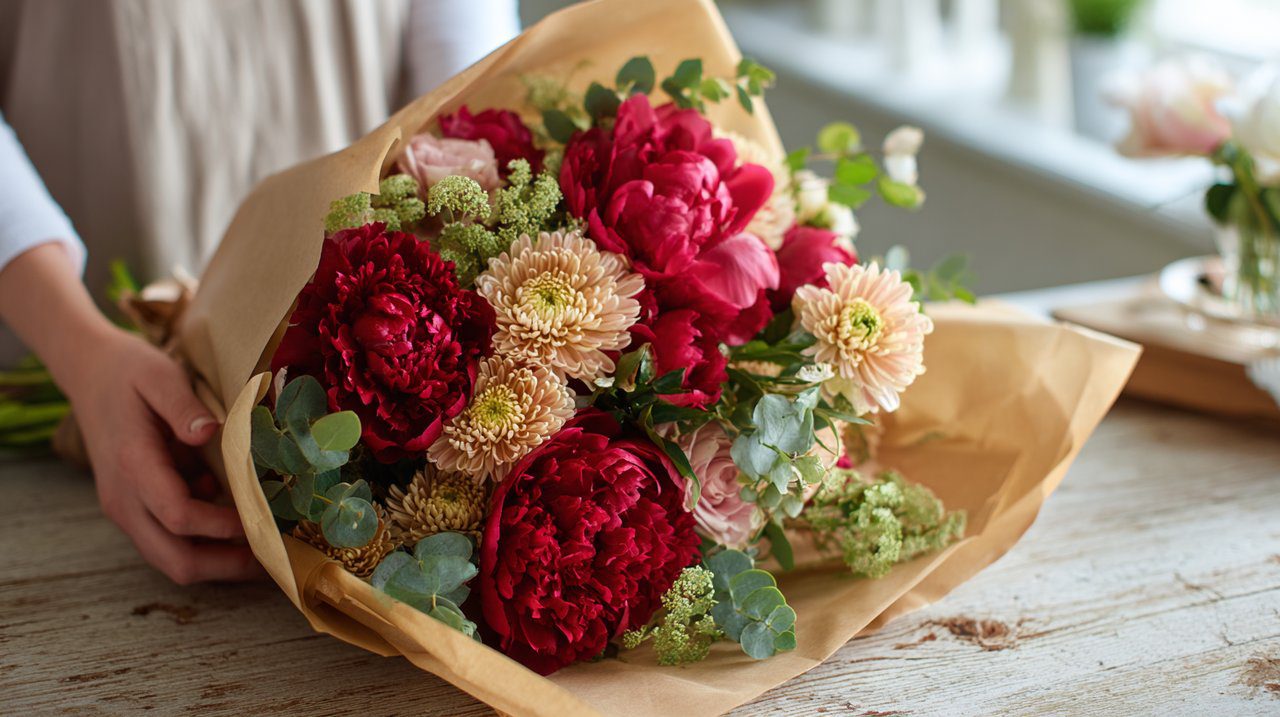
Contemporary practice also blends traditional and modern. You’ll see “New Chinese Style” bouquets that mix traditional peonies with Western garden roses, or luxury gift boxes that pair orchids with imported specialty blooms. Among younger urban recipients, Korean-style and Morandi-palette arrangements have gained significant ground — a shift away from the tightly packed, bright-red traditional style toward something more minimalist and aesthetically curated.
The underlying festival logic still applies, though. A Qingming arrangement in modern Morandi tones still uses white and muted blooms; a Lunar New Year bouquet in Korean style still anchors on auspicious flowers. Style evolves; symbolism holds.
Festival flowers in China work best when they match the specific emotional register of the day — celebration for Lunar New Year, remembrance for Qingming, warmth for Mid-Autumn, romance for Qixi, longevity for Double Ninth. Get the register right and the rest tends to follow.
Now I’m curious — which festival feels most challenging for you to navigate as an overseas sender?
Common Questions
Flowers in Chinese culture are more than just beautiful decorations; they convey deep cultural meanings, traditions, and specific wishes, acting as a sophisticated symbolic language.
花语 (huāyǔ) means 'the silent language of flowers' in Chinese, representing a system where each type of flower carries distinct meanings related to virtues, aspirations, and emotions.
For the Spring Festival, flowers such as plum blossoms, narcissus, and pussy willows are ideal as they symbolize renewal and new beginnings.
Color plays a crucial role in floral symbolism; different colors can amplify or alter the message of the flowers, so choosing the right color is as important as selecting the flower type.
Common pitfalls include presenting an inauspicious number of flowers, using wilting blooms, or selecting colors that may carry negative meanings, such as white for joyful celebrations.